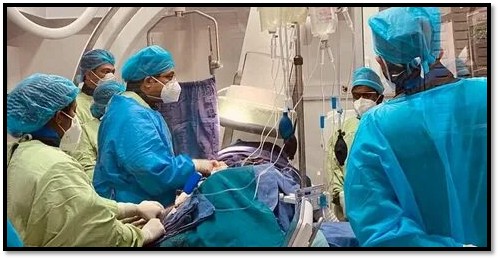
Valve Repair Without the Scar: Why TAVI is the New Gold Standard for Pune’s Seniors
Imagine this: You have worked hard your entire life, successfully navigated the bustling streets of Pune, raised a family, and finally reached your golden years. This is the time meant for peaceful morning walks in Kamala Nehru Park, playing with your grandchildren, and enjoying the vibrant cultural life of the city.
But lately, something is wrong. Climbing a single flight of stairs leaves you breathless. A short walk feels like a marathon. Your chest feels tight, and a lingering fatigue refuses to go away.
When your cardiologist diagnoses you with severe aortic stenosis—a narrowing of the heart’s main valve—the traditional solution often brings its own wave of fear: open-heart surgery. For many seniors, the thought of having their chest opened, facing a long and painful recovery, and dealing with the risks associated with major surgery at an advanced age can be overwhelming. As a result, many older patients choose to live with their limitations rather than undergo open-heart surgery.
But what if you could receive a brand-new heart valve without a major surgical scar?
Welcome to the era of Transcatheter Aortic Valve Implantation (TAVI), a revolutionary, minimally invasive procedure that has transformed cardiac care. Here is a closer look at why TAVI is rapidly becoming the gold standard for seniors in Pune, offering a renewed quality of life without the trauma of traditional surgery.
The Silent Threat: Understanding Aortic Stenosis in the Aging Heart
To understand the benefits of TAVI, it is important to first understand the condition it is designed to treat.
Your heart has four valves, and the aortic valve serves as the main gateway. Every time your heart beats, this valve opens to allow oxygen-rich blood to flow from the heart to the rest of your body. As we age, calcium deposits can accumulate on the valve leaflets. Over time, the valve becomes stiff, thickened, and narrowed—a condition known as severe aortic stenosis.
When this happens, your heart must work much harder to pump blood through the narrowed valve opening. This extra strain weakens the heart muscle and may lead to symptoms such as:
- Severe breathlessness (dyspnea)
- Chest pain or tightness (angina)
- Dizziness, lightheadedness, or sudden fainting
- Persistent, unexplained fatigue
Clinical research has shown that severe, symptomatic aortic stenosis is not a condition that should be ignored. Without appropriate treatment, the outlook can be extremely serious. Replacing the damaged valve is often the most effective solution.
The Traditional Approach vs. The New Gold Standard
For many years, the standard treatment was Surgical Aortic Valve Replacement (SAVR), a major open-heart operation. It involves a sternotomy (opening the breastbone), temporarily stopping the heart, using a heart-lung bypass machine, and undergoing a recovery period that may extend over several months. For elderly or medically fragile patients, this surgery can place considerable physical stress on the body.
TAVI (also known as TAVR) offers a different approach.
Instead of opening the chest, the procedure is performed through a small puncture, most commonly in the femoral artery located in the groin.
Think of it as placing a new valve inside the existing one without opening the heart. Using advanced imaging guidance, an interventional cardiologist carefully advances a thin, flexible catheter through the blood vessels to the heart. A specially designed collapsible replacement valve is delivered through the catheter. Once positioned correctly, the new valve expands, gently pushing the diseased valve leaflets aside and immediately taking over the function of regulating blood flow.
No opening of the chest. No heart-lung machine. No large surgical scar.
Why TAVI is a Game-Changer for Seniors
Recent clinical evidence has demonstrated a significant shift in the treatment of aortic stenosis among older adults. TAVI is no longer reserved only for patients considered too high-risk for open-heart surgery. It has become the preferred treatment option for many suitable patients across different risk categories. Here is why it is particularly beneficial for seniors:
Minimally Invasive with Faster Recovery
Unlike traditional open-heart surgery, where hospitalization may extend beyond a week and recovery can take several months, TAVI is usually completed within 1 to 2 hours. Many patients are able to walk the following day and are discharged within 48 to 72 hours. Normal daily activities can often be resumed within days instead of months.
Lower Risk of Surgical Complications
Since there is no large chest incision and the chest cavity remains closed, the risk of major surgical wound infections is significantly reduced. Additionally, because many patients avoid prolonged heart-lung bypass support, the likelihood of postoperative cognitive changes associated with major cardiac surgery may also be lower.
Rapid Improvement in Symptoms
One of the most remarkable benefits of TAVI is the quick improvement in symptoms. Many patients who previously experienced severe breathlessness during routine activities often notice a significant improvement in energy levels and breathing shortly after the procedure.
Suggested Multimedia: An infographic comparing the recovery timeline of traditional Open-Heart Surgery and the TAVI procedure, highlighting the “Return to Normal Life” milestone.
Answering Your Questions: Is TAVI Right for You?
When considering an advanced treatment option, patients and families naturally have questions. Here are answers to some of the most common ones.
Q: Am I too old for the TAVI procedure?
A: Age alone is rarely a limiting factor for TAVI. The procedure was specifically developed for patients who may not be ideal candidates for open-heart surgery. Successful TAVI procedures are routinely performed on patients in their 70s, 80s, and even 90s. The decision is based on overall health, frailty, and individual medical evaluation rather than age alone.
Q: Is the TAVI procedure painful?
A: Since TAVI is minimally invasive, most patients experience very little discomfort. Mild soreness at the catheter insertion site, usually in the groin, is common, but there is no breastbone incision to heal. The procedure is generally performed under conscious sedation or light general anesthesia, making it well tolerated by most patients.
Q: How long does the new TAVI valve last?
A: Long-term clinical studies have demonstrated excellent durability of modern transcatheter heart valves. Although longevity varies from patient to patient, current evidence shows that these valves continue to function effectively for many years, providing lasting improvement in heart function.
Choosing the Right Expertise for Your Heart
While TAVI represents a major advancement in cardiovascular care, successful outcomes depend greatly on the expertise of the medical team performing the procedure. It requires exceptional precision, specialized training, and extensive experience in structural heart interventions.
For families in Pune and the surrounding regions, selecting the right cardiac center is one of the most important decisions. An experienced multidisciplinary team, advanced imaging technology, and a patient-focused approach are essential for achieving the best possible outcomes.
With a commitment to delivering advanced cardiovascular care, the dedicated specialists at Cardium provide comprehensive evaluations and personalized treatment plans to determine whether TAVI is the most appropriate option for each patient.
Do not let concerns about open-heart surgery prevent you from receiving the treatment you need. Modern minimally invasive therapies can help you regain your quality of life and return to the activities you enjoy.
Reclaim Your Golden Years Today
If you or a loved one are experiencing symptoms of aortic stenosis, do not delay seeking medical attention. Schedule a comprehensive consultation with a TAVI specialist to explore minimally invasive treatment options.
Dr. Rahul Gupta
Cardium Heart Care
Address: Shop No. 1 & 2, Intercity CHS, Swami Samarth Marg, behind Fire Brigade, Juhu Nagar, Sector-16, Vashi, Navi Mumbai, Maharashtra – 400703
Phone: 09869325666
Recent Posts
-
 Stem Cell Therapy 2026: Can We Actually Regenerate a Damaged Heart Muscle?
 -
 Pacemakers in 2026: Why the Latest Leadless Devices are Practically Invisible Under the Skin
 -
 The 10-Minute TMT: What Your Stress Test Result Actually Says About Your 10-Year Heart Risk
 -
 How Advanced Heart Care is Giving Pune’s Grandparents a Second Lease on Life
 -
 Stent vs. Bypass: How AI-Guided Imaging Helps Dr. Rahul Gupta Make the “Perfect” Choice for You