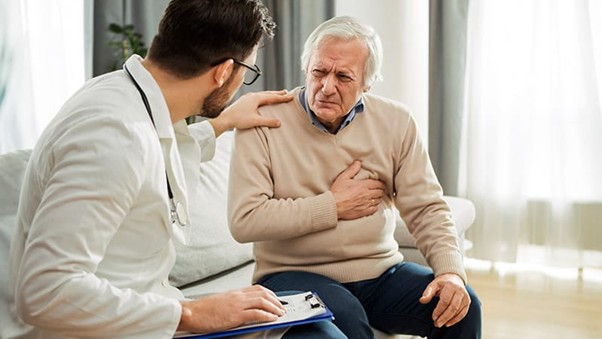
The “Virtual Safety Net”: How Cardium’s AI-Powered Remote Monitoring Prevents Hospital Visits
What if your heart could send a text message to your doctor before you felt a single symptom? In a world where we can track a food delivery in real-time down to the street corner, it is high time we applied that same level of precision and oversight to our most vital organ. Cardium’s “Virtual Safety Net” isn’t just technology; it is a 24/7 digital guardian that catches the whispers of heart distress before they turn into a scream for an ambulance.
For decades, cardiology was a “reactive” science. You felt chest pain, you went to the ER. You felt a flutter, you booked an appointment for next Tuesday. But the heart doesn’t wait for office hours. Often, by the time a patient feels a symptom strong enough to warrant a hospital visit, the underlying issue has been brewing for days or weeks.
As we navigate 2026, the paradigm has officially shifted from reactive to “predictive.” Through AI-powered remote monitoring, the walls of the clinic have expanded into the homes of patients in Navi Mumbai, Pune, and beyond. This “Virtual Safety Net” is fundamentally changing how we prevent hospitalizations, manage chronic conditions, and provide peace of mind to families.
The Gap in Traditional Care: Why “Once a Month” Isn’t Enough
In traditional heart care, a doctor sees a “snapshot” of a patient. During a 15-minute consultation, we check blood pressure, listen to the heart, and perhaps look at an ECG. But that patient lives 43,000 minutes every month outside of that office.
A lot can happen in those 43,000 minutes. Blood pressure can spike during a stressful commute in Hinjewadi; fluid can begin to build up in the lungs of a heart failure patient in Vashi; or a silent arrhythmia like Atrial Fibrillation (AFib) can flicker on and off while the patient is asleep.
Clinical research consistently shows that the “snapshot” model of care often misses early warning signs. By the time a patient presents at the hospital with “acute” symptoms, the intervention required is often more invasive, more expensive, and carries a higher risk. The goal of remote monitoring is to bridge this gap, turning the snapshot into a continuous, high-definition movie of the heart’s health.
How the AI-Powered Safety Net Actually Works
The “Virtual Safety Net” relies on three pillars: sophisticated sensors, Artificial Intelligence, and expert clinical oversight.
- Data Collection (The Sensors)
Patients are equipped with medical-grade wearables or home-based devices that track vital metrics. These aren’t just fancy step-counters. They monitor:
- Heart Rate and Rhythm: Catching palpitations or “skipped beats” in real-time.
- Oxygen Saturation (SpO2): Crucial for lung and heart coordination.
- Blood Pressure Trends: Identifying “surges” rather than just single high readings.
- Heart Failure Markers: Advanced sensors can even detect microscopic changes in thoracic impedance, which signals that the body is starting to retain fluid—often 5 to 7 days before the patient feels any breathlessness.
- The AI Filter (The Intelligence)
A single patient can generate thousands of data points a day. It is impossible for a human to watch every heartbeat of every patient. This is where AI excels. The algorithms at Cardium analyze these massive data streams, looking for patterns that deviate from the patient’s unique “baseline.”
The AI doesn’t just look for “high” or “low” numbers; it looks for trends. If a patient’s resting heart rate has been gradually creeping up by 2 beats per day over a week, the AI flags this as a “red alert.” To a human, a heart rate of 82 might look normal, but if the AI knows that patient’s normal is 70, it knows a problem is brewing.
- The Clinical Connection (The Action)
When the AI detects a red alert, it doesn’t just send a notification to a phone. It alerts the clinical team at CARDIUM HEART RATE A specialist can then review the data and call the patient.
- “Mr. Sharma, your data shows you are retaining a bit of fluid. Instead of waiting for you to feel breathless and go to the ER, let’s adjust your diuretic dosage today.”
This simple, proactive phone call is what prevents the 3:00 AM hospital visit.
Preventing the “Hospitalization Spiral”
Hospital visits are more than just an inconvenience; for cardiac patients, they can be the start of a downward spiral. Frequent hospitalizations are associated with increased stress, risk of hospital-acquired infections, and a general decline in functional independence.
Recent consensus in cardiovascular journals highlights that remote monitoring reduces heart failure-related hospitalizations by up to 30-40%. By catching issues at the “yellow light” stage, we prevent them from ever turning “red.”
This is especially critical for patients who have recently undergone major procedures. Whether a patient has had a complex stenting procedure or a Transcatheter Aortic Valve Implantation (TAVI) the first 30 days after discharge are the most vulnerable. The Virtual Safety Net acts as an invisible bridge between the high-tech hospital environment and the comfort of home, ensuring that the recovery stays on track.
Empowering the Patient: Peace of Mind for Families
One of the most overlooked benefits of AI-powered monitoring is the reduction in “health anxiety.” Many heart patients live in constant fear of another attack. Every time they feel a twinge or a slight shortness of breath, they wonder, “Is this it? Should I go to the hospital?”
With the Virtual Safety Net, that burden is lifted. The patient knows that their heart is being “watched” by a sophisticated system. If something were truly wrong, their doctor would already know. This leads to better sleep, lower cortisol levels (the stress hormone), and an overall better quality of life.
For families—especially those whose elderly parents live in Pune or Mumbai while they work elsewhere—this technology is a godsend. It provides an objective “check-in” that is more reliable than a daily phone call asking, “How are you feeling?”
The 2026 Standard: Depth, Accuracy, and Value
In the current landscape of digital health, there is a lot of “noise.” There are hundreds of gadgets that claim to monitor health. However, as an authoritative heart care provider, cardium emphasizes the difference between “wellness tracking” and “clinical monitoring.”
The Virtual Safety Net is grounded in academic rigor. It aligns with the latest findings in nutritional and metabolic studies, which show that heart health is a 24/7 endeavor. By integrating AI data with lifestyle relevance—such as tracking how a patient’s heart reacts to their specific diet or activity levels—we provide a level of substance and depth that a standard clinic visit simply cannot match.
FAQ: Common Questions About Remote Monitoring
Q: Do I need to be “tech-savvy” to use this?
A: Not at all. The latest 2026 devices are designed to be “set and forget.” Most are as simple as wearing a watch or stepping on a scale. The data transmits automatically to the clinic without the patient needing to press a single button.
Q: Is my data safe?
A: Security is a pillar of modern heart care. All data transmitted through Cardium’s AI systems is encrypted to the highest medical standards, ensuring that your heart’s rhythm remains a private conversation between you and your doctor.
Q: Can remote monitoring replace my doctor visits?
A: It doesn’t replace the doctor; it enhances the doctor. It allows your in-person visits to be more meaningful because Dr. Rahul Gupta will have a month’s worth of real-world data to review, rather than just a single blood pressure reading.
Conclusion: Joining the Future of Heart Care
The “Virtual Safety Net” is the ultimate expression of modern, empathetic cardiology. It acknowledges that patients are more than just their symptoms; they are people who want to stay out of the hospital and in their homes.
By combining the precision of Artificial Intelligence with the authoritative expertise of a master cardiologist, we are creating a world where heart emergencies are predicted, managed, and prevented. You don’t have to wait for the system to crash to seek help.
Step into the future of heart care. Let us build your safety net together. Explore our advanced monitoring solutions and preventive strategies at Cardium Heart Rate
Dr. Rahul Gupta Cardium Heart Care
Address: Shop No. 1 & 2, Intercity CHS, Swami Samarth Marg, behind Fire Brigade, Juhu Nagar, Sector-16, Vashi, Navi Mumbai, Maharashtra 400703
Phone no: 09869325666
Recent Posts
-
 Augmented Reality in the Cath Lab: How Dr. Rahul Gupta Uses 3D Heart Models for Precision Surgery
-
 The “Virtual Safety Net”: How Cardium’s AI-Powered Remote Monitoring Prevents Hospital Visits
-
 Stem Cell Therapy 2026: Can We Actually Regenerate a Damaged Heart Muscle?
-
 Pacemakers in 2026: Why the Latest Leadless Devices are Practically Invisible Under the Skin
-
 The 10-Minute TMT: What Your Stress Test Result Actually Says About Your 10-Year Heart Risk