Pacemakers in 2026: Why the Latest Leadless Devices are Practically Invisible Under the Skin
Imagine a medical device so small it fits inside a standard vitamin capsule, yet powerful enough to regulate the rhythm of your life. For decades, the hallmark of heart surgery was the “pacemaker pocket”—a visible bulge beneath the collarbone accompanied by a surgical scar. But in 2026, the latest leap in cardiac technology has rendered the pacemaker practically invisible, removing the wires and the “bulge” entirely. Your heart gets the beat it needs, while your skin remains as if nothing ever happened.
For over 60 years, pacemakers have been the unsung heroes of cardiovascular medicine, saving millions from the dangers of bradycardia (a slow heart rate). However, traditional pacemakers came with “strings attached”—literally. These devices required thin wires, known as leads, to be threaded through the veins into the heart. While effective, these leads were often the “weak link,” prone to fracturing, dislodging, or causing infections over time.
As we move through 2026, the “leadless” revolution is no longer a futuristic concept—it is the clinical gold standard for eligible patients. By eliminating the leads and the surgical pocket, we have entered an era where heart care is as discreet as it is life-saving.
The Engineering Marvel: What is a Leadless Pacemaker?
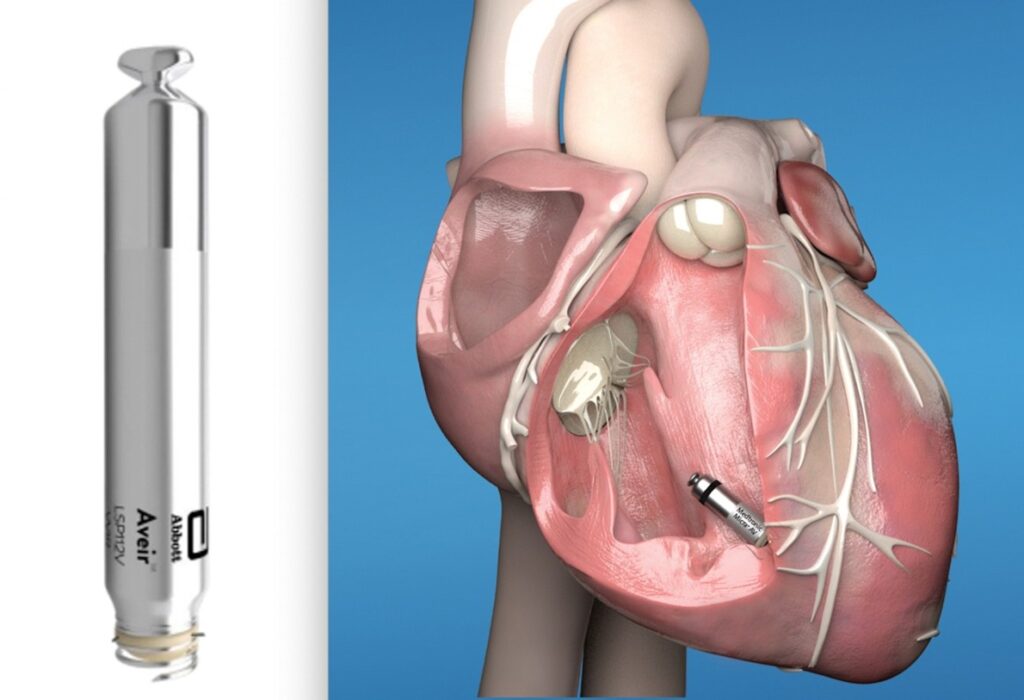
To understand why these devices are a game-changer, we have to look at their scale. A traditional pacemaker is roughly the size of a pocket watch and is implanted in a “pocket” created under the skin of the chest. From there, insulated wires travel through a vein to the heart.
A leadless pacemaker, by contrast, is a self-contained, all-in-one device. It is roughly 90% smaller than a traditional pacemaker—about the size of a large vitamin or a AAA battery.
How It Works Without Wires
Instead of sitting in the chest wall, the leadless device is placed directly inside the heart’s right ventricle. It doesn’t need a wire to send an electrical pulse because the pulse generator and the electrodes are in the same tiny housing. It anchors itself to the heart wall using small “tines” or a screw-in mechanism, sensing the heart’s natural rhythm and providing an electrical “nudge” only when the heart rate drops too low.
Why “Invisible” is More Than Just Aesthetic
While the lack of a visible scar or bulge is a significant benefit for a patient’s self-esteem and privacy, the “invisibility” of leadless technology in 2026 offers profound clinical advantages.
- Zero “Pocket” Complications
In traditional pacemakers, the surgical pocket under the skin is a common site for complications. These can include:
- Hematomas: Bruising or blood pooling at the site.
- Infections: The pocket can occasionally become infected, requiring the entire system to be removed.
- Skin Erosion: In thinner patients, the device can sometimes wear against the skin from the inside.
Leadless devices bypass the chest wall entirely, eliminating 100% of pocket-related risks.
- Eliminating the “Lead” Problem
Leads are the most vulnerable part of a traditional pacing system. They have to withstand over 30 million heartbeats a year, which can eventually lead to insulation failure or “lead fracture.” Furthermore, threading wires through veins can occasionally cause blockages (venous thrombosis). By removing the leads, we remove the primary cause of long-term pacemaker failure.
- No Activity Restrictions
Patients with traditional pacemakers are often told to avoid heavy lifting or repetitive overhead movements with the arm on the side of the device to prevent the leads from dislodging during the first few weeks. Since leadless devices are securely anchored inside the heart, patients can often return to full physical activity—including swimming, golf, or gym workouts—much faster.
The Procedure: From Groin to Heart in 30 Minutes
One of the reasons leadless technology is so enticing to the modern patient is the simplicity of the implantation process. It is a minimally invasive procedure that mirrors the “walk-in, walk-out” philosophy of modern cardiology.
- Access: Instead of a surgical incision in the chest, the cardiologist makes a tiny puncture in the femoral vein in the groin.
- Delivery: Using a specialized catheter (a thin, flexible tube), the leadless device is “steered” through the venous system and into the right ventricle of the heart.
- Placement: Once the doctor confirms the device is in the optimal position and sensing correctly, it is deployed and anchored.
- Recovery: The catheter is removed, and the puncture site is closed with a small bandage or a stitch. Most patients are back on their feet within a few hours and go home the same day.
This approach is particularly beneficial for those who are also candidates for other structural heart repairs. For instance, many seniors who require valve intervention, such as Transcatheter Aortic Valve Implantation (TAVI) appreciate that cardiac care is moving toward these “no-scalpel” solutions that prioritize rapid recovery.
Is a Leadless Pacemaker Right for Everyone?
In 2026, while leadless technology has expanded, it is essential to have an authoritative evaluation to see if you are a candidate.
Currently, leadless pacemakers are primarily designed for single-chamber pacing. This means they are ideal for patients with specific types of arrhythmias, such as:
- Atrial fibrillation with slow heart rates (bradycardia).
- Tachycardia-Bradycardia Syndrome.
- Patients who only need occasional pacing support.
However, for patients who require “dual-chamber” pacing (coordination between the top and bottom chambers of the heart), traditional pacemakers or the very latest “communicating” leadless pairs are required. A comprehensive diagnostic workup—often involving a stress test or a Holter monitor—is necessary to determine the exact electrical needs of your heart.
2026 Standards: Safety, Longevity, and Consensus
The clinical consensus among global heart associations is clear: leadless pacing is a transformative leap in safety. Long-term studies show a significant reduction in total complications compared to traditional systems.
Furthermore, battery life has improved drastically. Modern leadless devices are designed to last between 10 to 14 years, depending on how often the heart needs pacing support. When the battery eventually runs low, the device is either retrieved or, more commonly, a new one is placed alongside it, as the heart has ample space to accommodate these tiny capsules.
Trusting the Expert Hand at Cardium
Cardiac rhythm management is a delicate science that requires more than just high-tech gadgets; it requires the experienced hand of a specialist who understands the intricate electrical map of your heart. In the Navi Mumbai and Pune regions, patients have access to this world-class level of care through the expertise of Dr. Rahul Gupta and his team.
At Cardium, we believe that the best medical technology should be “invisible”—not just in how it looks under your skin, but in how seamlessly it integrates into your life. Whether you are dealing with a slow heart rate, palpitations, or require a second opinion on a device implant, our goal is to provide data-driven, compassionate care that gets you back to your life without the “scar.”
Your heart’s rhythm is the cadence of your future. Don’t let a visible device hold you back. Explore the invisible advantage of 2026 heart tech at Cardium Heart Care
Contact Information (NAP)
Dr. Rahul Gupta Cardium Heart Care
Address: Shop No. 1 & 2, Intercity CHS, Swami Samarth Marg, behind Fire Brigade, Juhu Nagar, Sector-16, Vashi, Navi Mumbai, Maharashtra 400703
Phone no: 09869325666
Recent Posts
-
 Stem Cell Therapy 2026: Can We Actually Regenerate a Damaged Heart Muscle?
 -
 Pacemakers in 2026: Why the Latest Leadless Devices are Practically Invisible Under the Skin
 -
 The 10-Minute TMT: What Your Stress Test Result Actually Says About Your 10-Year Heart Risk
 -
 How Advanced Heart Care is Giving Pune’s Grandparents a Second Lease on Life
 -
 Stent vs. Bypass: How AI-Guided Imaging Helps Dr. Rahul Gupta Make the “Perfect” Choice for You