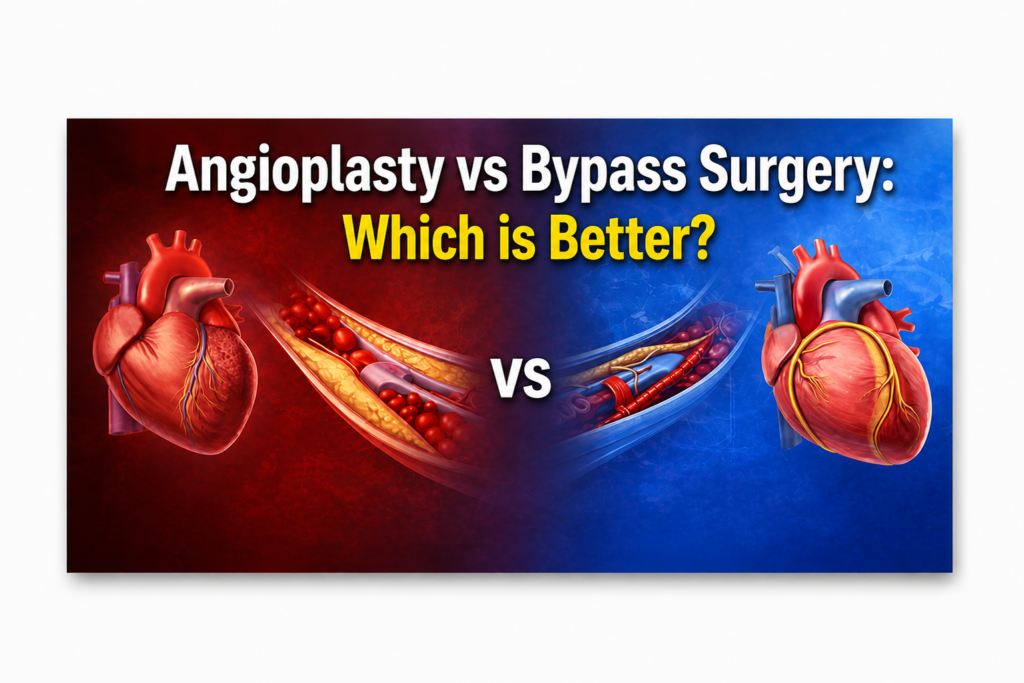
Angioplasty vs Bypass Surgery: Which is Better? (Complete Guide)
Heart disease is one of the leading health concerns worldwide, especially in countries like India where lifestyle changes, stress, and unhealthy eating habits are increasing the risk even among young adults. One of the most common problems is blockage in the coronary arteries, which restricts blood flow to the heart and can lead to serious conditions like heart attacks if not treated on time.
When it comes to treating blocked arteries, two of the most commonly recommended procedures are angioplasty and bypass surgery. Many patients feel confused about which option is better, safer, and more effective. The truth is that both treatments are highly effective, but the right choice depends on several medical and personal factors. Understanding these procedures can help you make a more informed and confident decision.
What is Angioplasty?
Angioplasty is a minimally invasive procedure used to open blocked or narrowed coronary arteries. In this process, a doctor inserts a thin tube called a catheter through a blood vessel in the wrist or groin and carefully guides it to the affected artery. Once it reaches the blockage, a small balloon attached to the catheter is inflated to widen the artery. In most cases, a stent (a small mesh tube) is placed to keep the artery open and maintain proper blood flow.
One of the biggest advantages of angioplasty is that it does not involve major surgery. The procedure is relatively quick and usually completed within a couple of hours. Patients experience less pain, minimal scarring, and a shorter hospital stay. Most people can return to their normal routine within a few days.
However, angioplasty is generally recommended for patients with mild to moderate blockages. In some cases, the artery may become narrow again over time, especially if proper lifestyle changes are not followed. This may lead to the need for repeat procedures in the future.
What is Bypass Surgery?
Bypass surgery, also known as coronary artery bypass grafting (CABG), is a more complex and invasive procedure used to treat severe or multiple blockages. In this surgery, a healthy blood vessel is taken from another part of the body—such as the leg, arm, or chest—and used to create a new pathway for blood to flow around the blocked artery.
Unlike angioplasty, bypass surgery involves opening the chest and requires a longer hospital stay. The recovery period is also longer and may take several weeks to a few months. Despite being more complex, it is often considered a more permanent solution for serious heart conditions.
Bypass surgery is especially beneficial for patients with multiple blocked arteries, diabetes, or advanced heart disease. It provides long-lasting results, reduces the chances of recurring blockages, and often improves overall heart function and quality of life.
Key Differences and Which is Better?
- Procedure Type:
Angioplasty is minimally invasive, while bypass surgery is an open-heart procedure. - Recovery Time:
Angioplasty allows recovery within a few days; bypass surgery may take weeks to months. - Best For:
Angioplasty is suitable for mild or single blockages; bypass surgery is better for multiple or severe blockages. - Durability:
Angioplasty may require repeat procedures, whereas bypass surgery offers long-term results. - Cost:
Angioplasty is cheaper initially; bypass surgery can be more cost-effective in the long run. - Risk:
Angioplasty has lower short-term risk; bypass surgery provides better long-term outcomes in complex cases.
Conclusion
In conclusion, both angioplasty and bypass surgery are effective treatments for heart blockages, and each has its own advantages. Angioplasty is a quick and less invasive option, while bypass surgery offers a more durable and long-term solution for complex cases.
No matter which procedure is chosen, maintaining a healthy lifestyle is essential. Eating a balanced diet, exercising regularly, avoiding smoking, and managing stress play a crucial role in long-term heart health. Just like people work consistently to earn money online and secure their future, taking consistent steps toward heart care ensures a healthier and longer life.
Always consult a qualified cardiologist before making any decision. Early diagnosis, the right treatment, and proper care can significantly improve your quality of life and help you stay heart-healthy for years to come.
Dr. Rahul R. Gupta
Cardium Advanced Heart Care Clinic, Kharghar , Sector-16, Vashi, Parel,Mumbai,
Recent Posts
-
 Stem Cell Therapy 2026: Can We Actually Regenerate a Damaged Heart Muscle?
 -
 Pacemakers in 2026: Why the Latest Leadless Devices are Practically Invisible Under the Skin
 -
 The 10-Minute TMT: What Your Stress Test Result Actually Says About Your 10-Year Heart Risk
 -
 How Advanced Heart Care is Giving Pune’s Grandparents a Second Lease on Life
 -
 Stent vs. Bypass: How AI-Guided Imaging Helps Dr. Rahul Gupta Make the “Perfect” Choice for You