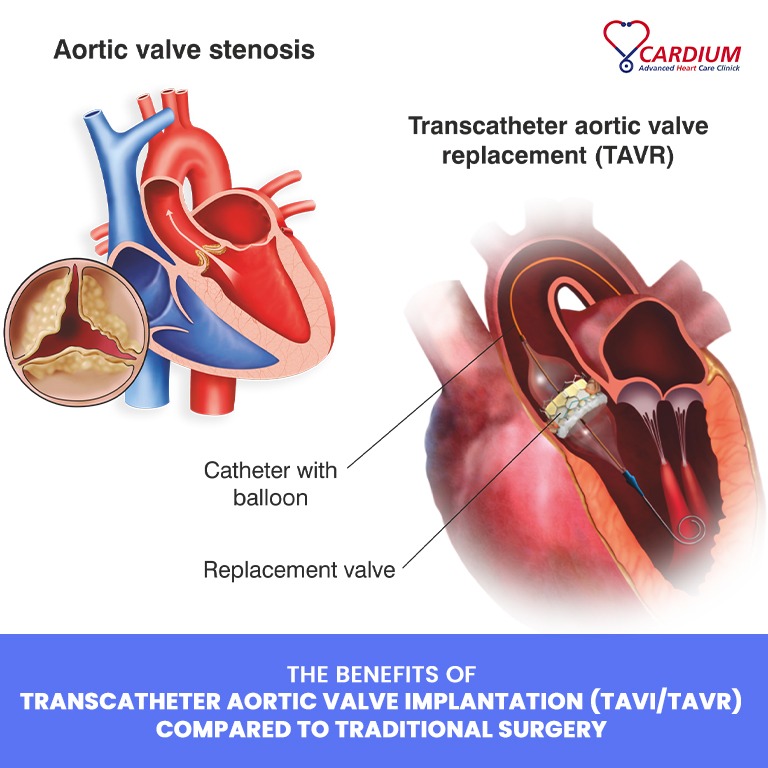
When it comes to treating aortic stenosis, a condition in which the aortic valve narrows, there are two main options: transcatheter aortic valve implantation (TAVI/TAVR) and traditional aortic valve replacement surgery. While both options have their benefits, TAVI/TAVR has become a popular alternative to traditional surgery, especially in older or high-risk patients. In this blog post, we will compare the two procedures and highlight the benefits of TAVI/TAVR.
What is TAVI/TAVR?
TAVI/TAVR is a minimally invasive procedure that replaces a damaged or diseased aortic valve without the need for open-heart surgery. Instead of a full-scale operation, the new valve is implanted through a catheter that is inserted through a small incision in the leg or chest.
What is Traditional Aortic Valve Replacement Surgery?
Traditional aortic valve replacement surgery involves open-heart surgery to remove the damaged valve and replace it with a new one. This procedure requires a larger incision, general anesthesia, and a longer recovery time.
Benefits of TAVI/TAVR Compared to Traditional Surgery
- Less invasive: TAVI/TAVR is a minimally invasive procedure that does not require open-heart surgery. This results in less pain and a quicker recovery time compared to traditional surgery.
- Shorter hospital stay: TAVI/TAVR patients typically have a shorter hospital stay, often only one or two days, compared to several days or more for traditional surgery.
- Lower risk of complications: TAVI/TAVR has a lower risk of complications compared to traditional surgery. These complications include stroke, bleeding, and infection.
- Reduced recovery time: TAVI/TAVR patients typically have a quicker recovery time and can return to normal activities within a few weeks compared to several months for traditional surgery.
- Better outcomes for high-risk patients: TAVI/TAVR is especially beneficial for older or high-risk patients who may not be suitable for traditional surgery.
In conclusion, TAVI/TAVR is a highly effective alternative to traditional aortic valve replacement surgery. It offers patients a less invasive procedure with a shorter hospital stay, lower risk of complications, reduced recovery time, and better outcomes for high-risk patients. If you have been diagnosed with aortic stenosis, it’s important to discuss your options with your doctor to determine the best course of treatment for you.
Recent Posts
-
 Stem Cell Therapy 2026: Can We Actually Regenerate a Damaged Heart Muscle?
 -
 Pacemakers in 2026: Why the Latest Leadless Devices are Practically Invisible Under the Skin
 -
 The 10-Minute TMT: What Your Stress Test Result Actually Says About Your 10-Year Heart Risk
 -
 How Advanced Heart Care is Giving Pune’s Grandparents a Second Lease on Life
 -
 Stent vs. Bypass: How AI-Guided Imaging Helps Dr. Rahul Gupta Make the “Perfect” Choice for You